

Narrow stair moves common problems for Hounslow man and van
Posted on 29/06/2026
Narrow Stair Moves: Common Problems for Hounslow Man and Van Jobs
If you have ever tried to move a sofa, wardrobe, or washing machine up a tight staircase, you will know the feeling: the walls seem closer than they looked, the landing feels smaller than memory, and suddenly a simple move is not simple at all. Narrow stair moves common problems for Hounslow man and van jobs are exactly that kind of headache. In Hounslow, where flats, maisonettes, Victorian conversions, and upper-floor properties are all part of the mix, awkward staircases are not unusual. This guide breaks down what usually goes wrong, how experienced movers handle it, and what you can do to avoid damage, delays, and a lot of unnecessary stress.
We will keep it practical. You will see the most common access issues, the safest moving methods, and when it makes sense to book specialist help such as flat removals Hounslow or a flexible man and van Hounslow service. There is also a checklist, a comparison table, and a real-world example so you can plan with more confidence. To be fair, narrow stairs are one of those things people underestimate right until the mattress gets stuck halfway up.
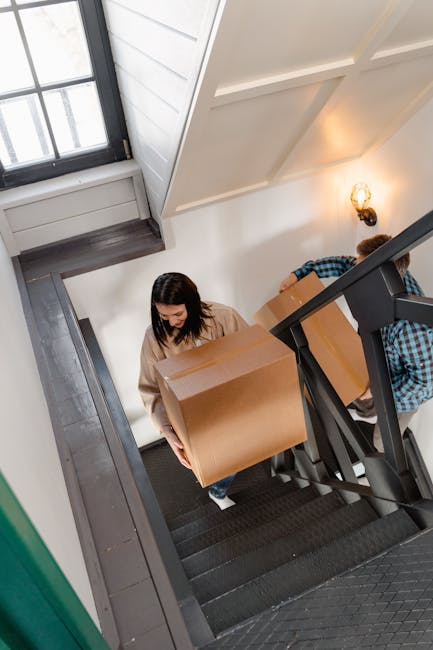
![A person with long dark hair tied back, wearing a grey t-shirt, is seen from above inside a home, carrying a large cardboard box with packing tape and a red recycling symbol. The individual is walking down a wooden staircase with white risers and railings, approaching a doorway that leads to an outdoor area or driveway where a van is parked for furniture transport. The floor is made of polished wood, and natural light illuminates the scene, suggesting daytime. Visible parts of the staircase, the person's arms gripping the box, and the box's taped edges highlighting safe packing practices are included. This image exemplifies aspects of home relocation and packing during a house move, with a focus on the logistics of furniture transport managed by [COMPANY_NAME], Hounslow Man and Van, in the context of common stairway challenges during removals.](/pub/blogphoto/narrow-stair-moves-common-problems-for-hounslow-man-and-van1.jpg)
Why Narrow stair moves common problems for Hounslow man and van Matters
Narrow stair moves matter because access is often the hidden deciding factor in a removal. A van may be parked perfectly, boxes may be stacked neatly, and the job can still slow to a crawl if the staircase is tight, steep, curved, or boxed in by bannisters and low ceilings. In Hounslow, that is a real consideration for people moving in or out of flats, split-level homes, older terraces, and converted buildings.
The main issue is simple: furniture and awkward items rarely move in a straight line. They need space to tilt, rotate, and breathe a bit. On a narrow stairwell, you lose those options fast. A wardrobe can snag on the newel post. A fridge can bump the wall. A sofa can look like it will fit, then refuse to turn at the landing. And once one item jams, the whole move can stall.
This is not just about inconvenience. Tight stairs raise the risk of scraped walls, chipped paint, crushed corners, strained backs, and upset neighbours if the stairwell is shared. The more complex the access, the more planning matters. That is why many customers start looking at removal services in Hounslow rather than trying to muscle through on the day. A decent plan saves time, and time is the thing most moves run short on.
Expert summary: narrow stair moves are not "just another carry job". They are a planning job first, a lifting job second. Measure properly, strip items down where possible, protect the route, and use the right number of people for the heaviest piece. That is the whole game, really.
How Narrow stair moves common problems for Hounslow man and van Works
In practice, a narrow stair move starts long before the van arrives. The mover needs to understand the property layout, the size of the items, and the order in which things should be brought out or carried in. A good team will often ask questions such as: How wide are the stairs? Is there a turn on the landing? Are there low ceilings? Is the stairwell shared? Are there parking restrictions outside? Those questions sound basic, but they prevent expensive surprises.
For many Hounslow homes, the job is handled through a mix of parking planning, item dismantling, and careful carrying technique. On smaller jobs, a man with a van Hounslow booking can be enough. On more awkward stair layouts, a team that already understands removals Hounslow is often a safer choice because they are used to working around obstacles rather than forcing a straight carry.
The moving process usually follows a pattern:
- Survey the access and identify problem items.
- Protect the stair edges, walls, and floors.
- Dismantle furniture where it helps, not where it is unnecessary.
- Move lighter items first if they clear a path for the larger pieces.
- Use lifting straps, blankets, and correct hand positions.
- Rotate and pivot items on landings rather than forcing them head-on.
- Load the van in a controlled sequence so the difficult items do not become the next problem.
You can think of it as a route puzzle. The item is not just being lifted; it is being negotiated through the building. Small change, big difference. A table that was impossible in one orientation may pass easily once turned on edge and carried with the right angle. That sounds obvious after the fact, but on the stairs, when everybody is sweating and the clock is moving, obvious things tend to disappear.
Key Benefits and Practical Advantages
The right approach to narrow stair moves brings a few important benefits. First, it reduces damage. That matters not only for the furniture itself but for walls, bannisters, doors, and flooring. Second, it helps the move stay on schedule. A careful, pre-planned carry is usually faster than three people wrestling with a stubborn chest of drawers while someone mutters about "one more shove".
There is also a comfort benefit. If you are moving from or into a flat, especially in a building with shared stairs, the right handling makes the day feel far less disruptive. Neighbours notice less noise. Items are less likely to scrape. And you are less likely to end the day with a sore shoulder and a slightly haunted expression.
For the customer, a properly managed narrow stair move can also make costs easier to control. When access issues are understood in advance, the mover can choose the right vehicle, the right crew size, and the right amount of time. That is where pages such as pricing and quotes become useful, because awkward access often affects the final time estimate more than the mileage does.
There is another advantage people sometimes miss: good planning creates a calmer packing order. If you know the sofa has to come down a tight turn, you will pack the route around it rather than burying it under ten smaller boxes. It sounds minor, but it makes the whole move feel less chaotic.
Who This Is For and When It Makes Sense
This kind of move is for anyone dealing with limited access, but it is especially relevant for:
- people moving in or out of upper-floor flats
- tenants in converted houses with steep internal stairs
- families moving bulky furniture through older staircases
- students shifting belongings between shared homes
- homeowners moving large items from a first-floor loft room
- office teams relocating equipment from awkward walk-up premises
It also makes sense if you are moving just one or two large items rather than a full house. A piano, sideboard, treadmill, or wardrobe can be more difficult than twenty boxes. That is one reason specialist services such as furniture removals Hounslow and piano removals Hounslow exist in the first place. The issue is not volume alone. It is shape, weight, balance, and access all at once.
If your property has a narrow stairwell and you are thinking, "we can probably manage it ourselves," that may be true for soft bags and small boxes. For anything heavy, awkward, or expensive, it is worth pausing. Do you really want to gamble with a corner staircase and a new sofa? Probably not.
It is also sensible for people who need a quick turnaround. If you are facing a same-day move or a last-minute key handover, narrow stair access leaves less room for delay. In that situation, a service like same-day removals Hounslow can be a practical fit, provided the team understands the access constraints before they arrive.
Step-by-Step Guidance
Here is the simplest way to handle a narrow stair move without turning it into a minor disaster.
- Measure the route. Check stair width, landing space, ceiling height, door openings, and any sharp turns. Measure the furniture too, not just the room. People often forget that the staircase is the real bottleneck.
- Identify awkward items first. Put the heaviest or bulkiest pieces on the list: sofas, beds, wardrobes, appliances, desks, and mirrors. Do not leave these until the end.
- Clear the access path. Remove loose rugs, shoe racks, bins, picture frames, and anything else that narrows the space or creates a trip hazard.
- Protect the building. Use blankets, cardboard, corner guards, or floor covers where suitable. A simple wrap can save a lot of irritation later.
- Dismantle where sensible. Remove legs, shelves, doors, and drawers if that makes the object easier to carry. Do not dismantle things blindly, though. Sometimes a piece is sturdier left intact.
- Assign roles. One person leads, one controls the rear, and one guides the turns. With three people, communication becomes much easier.
- Carry slowly at the turns. Landings are where most awkward moves go wrong. Pause, reset grip, and rotate the item with intention.
- Load the van carefully. Heavier items go in first and are secured. The van should be chosen with enough space for a clean load, which is why a suitable removal van Hounslow matters more than people think.
If you are planning a flat move rather than a general house move, the stair strategy should be part of the booking conversation from the start. A specialist page like flat removals Hounslow is a useful reminder that access and property type go hand in hand.
One small but helpful habit: photograph the staircase and landings before the move. Nothing fancy. Just a couple of clear pictures. It helps everyone visualise what they are dealing with, and frankly it saves a lot of "I thought it was wider than that" back-and-forth on the day.
Expert Tips for Better Results
There are a few field-tested habits that make narrow stair moves much easier. None of them are glamorous, but they work.
- Use the right carry angle. Many items fit once tilted correctly. The trick is keeping balance while turning, not just brute force.
- Take the furniture apart before the team arrives. A few minutes with a screwdriver can save twenty minutes on the stairs.
- Keep the stairwell quiet and clear. Less chatter, fewer people crowding the turn, more control. Sounds dull, but it helps.
- Check shared access rules. In blocks and converted properties, neighbours or managing agents may have expectations about timing, noise, or lift use if a lift exists.
- Ask about insurance. If an item is valuable, make sure you know how it is covered during handling and transit. The page on insurance and safety is a good place to start thinking about that.
- Plan around the clock. Morning moves are often calmer. Later jobs can run into traffic, fatigue, and building noise limits. Not always, but often enough.
Another tip, and this one comes from experience rather than theory: keep a small "access kit" ready. Tape, gloves, a basic toolkit, and a few blankets can turn a rough stair move into a manageable one. You may not use everything. Fine. Better to have it and not need it than the other way round.
If you want the move to feel less improvised, it helps to combine good packing with good lifting. For that, a page like packing and boxes Hounslow is relevant because the smaller items also need to be packed with the stair route in mind. Heavy boxes near the top? Bad idea. Always.
Common Mistakes to Avoid
Most narrow stair problems are not dramatic disasters. They are small mistakes that compound. Here are the ones that come up most often.
- Not measuring properly. "It should fit" is not a measurement.
- Leaving bulky furniture intact. A bed frame with the slats removed may be easy; the same frame fully built may be a nightmare.
- Forcing the turn. If it is not moving cleanly, stop and reassess. Forcing it usually creates damage.
- Using too few helpers. Two people may be fine for boxes, but not for a large wardrobe on a curved staircase.
- Ignoring wall protection. One scrape, one chip, and suddenly the move gets more expensive than expected.
- Booking the wrong type of service. A general lift-and-load job is not always enough for awkward stairs. Sometimes you need a service built for access-heavy moves.
There is also a financial mistake people make: not asking about likely extras when access is difficult. If the stairwell adds time, or if parking is not straightforward, that can affect the quote. It is worth reading up on how to avoid hidden fees in Hounslow removal quotes before you confirm anything.
And yes, a common human error is assuming the crew will "just know" the tricky bits. They probably won't, unless you tell them. A photo, a quick description, and honest details go a long way.
Tools, Resources and Recommendations
You do not need a warehouse of gear to manage a narrow stair move, but a few tools make a proper difference.
| Tool or resource | What it helps with | Best use case |
|---|---|---|
| Furniture blankets | Protecting walls, doors, and corners | Large items and tight landings |
| Lifting straps | Improving grip and load control | Heavy items with awkward balance |
| Basic toolkit | Dismantling beds, tables, and wardrobes | Before the move starts |
| Floor protection | Reducing scuffs and marks | Shared stairs or polished floors |
| Pre-move photos | Showing access constraints clearly | Quotes and planning |
| Storage option | Handling items that do not fit immediately | Staggered move-ins or downsizing |
If you are between homes or not ready to move everything in one go, storage Hounslow can be a sensible buffer. That is especially useful when a stairwell limits what can be carried at one time, or when renovation work is still going on.
For people who want a broader overview of available help, the services overview page is useful because it shows how different removal needs can be matched to different job sizes and access conditions. Sometimes the best tool is simply choosing the right service model.
Law, Compliance, Standards, or Best Practice
For most domestic moves, the main concern is not a complex legal rulebook. It is safer working practice, property respect, and clear communication. Still, there are a few things worth keeping in mind.
Moving teams should handle items in a way that reduces injury risk and property damage. That means sensible lifting techniques, safe loading, and not overloading people or vehicles. If a stairwell is extremely tight, it is entirely reasonable to slow the process down or use extra help rather than pushing on and hoping for the best.
For customers, the practical best practice is to be honest about access. If there is a narrow staircase, steep steps, a weak banister, or a shared hallway, say so early. That helps the mover prepare properly and supports safer handling. It also makes pricing clearer, which is never a bad thing.
In shared buildings, you may also need to respect building rules about noise, access times, or use of common areas. Those rules vary, so it is wise to check in advance rather than assume. And if you are moving something very valuable, such as a piano or specialist item, proper handling and insurance become even more important. A careful approach is not overcautious; it is just sensible.
The same mindset applies to responsible business practices. If you want reassurance about how a company works, pages like about us, terms and conditions, and health and safety policy help build trust before anyone picks up a box.
Options, Methods, or Comparison Table
Not every narrow stair move needs the same approach. Here is a simple comparison to help you choose.
| Approach | Best for | Pros | Limitations |
|---|---|---|---|
| DIY with friends | Light boxes and a few small items | Low upfront cost, flexible timing | Higher injury risk, less control, harder with bulky items |
| Man and van | Small to medium moves with modest access issues | Practical, flexible, often efficient | May need clear access details and careful item selection |
| Specialist removal team | Heavy, valuable, or awkward items | Better planning, stronger handling, more protection | Usually costs more than a basic lift-and-load job |
| Storage plus staged move | Cluttered homes, renovations, delayed access | Reduces pressure, solves timing issues | More steps, possible extra cost |
For many local moves, the sweet spot is a well-planned man and van Hounslow booking with honest access details and a team that knows what it is doing. For more complex homes, especially flats, the balance may shift towards house removals Hounslow or a more tailored service.
There is no universal answer, and that is fine. The best method is the one that fits the staircase, the furniture, and the time available. Simple as that.
Case Study or Real-World Example
Here is a realistic example from the kind of move many people in Hounslow face.
A tenant in a first-floor flat had a two-seater sofa, a double mattress, a chest of drawers, and several boxed kitchen items to move out. The staircase was narrow, with a tight turn at the half-landing and a banister that took up just enough extra room to matter. At first glance, the sofa looked manageable. In the doorway, it looked less manageable. On the landing, it looked impossible. Typical.
The mover's first step was not lifting. It was measuring the route and checking which items could be separated. The sofa legs were removed, the mattress was wrapped, and the drawer unit was emptied so the weight came down. The team moved the mattress first because it was the least awkward object and gave them a cleaner path. Then they carried the sofa on edge, pausing at the landing to rotate it carefully instead of forcing the turn.
The job took longer than a straight-ground-floor move would have, but there was no wall damage and no panic halfway down the stairs. The client had also packed the boxes sensibly, which helped. Heavy books were in smaller boxes, lighter items in larger ones. That sounds like one of those tiny details nobody cares about until they are carrying it up a staircase. Then it matters a lot.
The lesson? Access planning saved the day. Not fancy equipment. Not speed. Planning.
If that sounds familiar, the best next step is often to compare your move with similar local jobs. For instance, the guide to the best man and van for Hounslow High Street moves and the article on narrow access removals near Osterley Park can help you see how route difficulty changes the approach.
Practical Checklist
Use this checklist before the move. It is simple, but it catches the important stuff.
- Measure staircase width, landings, and door frames.
- Measure the largest item in its carried orientation.
- Identify any item that needs dismantling.
- Photograph the access route and stair turns.
- Clear loose items from hallways and landings.
- Protect floors, walls, corners, and bannisters.
- Confirm parking or loading space near the property.
- Tell the mover about shared access, time limits, or unusual building rules.
- Pack heavy items into smaller boxes.
- Keep tools, tape, and blankets accessible on the day.
- Ask about insurance and how fragile items will be handled.
- Have a backup plan if one item will not clear the stairs.
If you are moving after dark or during a busy weekday, add a bit of extra buffer time. Traffic, neighbours, and tired arms can all make narrow stairs feel narrower. That is just how it goes sometimes.
Conclusion
Narrow stair moves are one of the most common reasons a "simple" Hounslow removal turns into a careful, technical job. The good news is that most problems are preventable. Measure the route. Tell the truth about access. Dismantle what can be dismantled. Protect the building. And choose the right help for the size of the job.
Whether you are moving out of a walk-up flat, shifting a single heavy item, or planning a whole-home relocation, the same principle applies: the staircase decides the method. Once you accept that, everything gets easier to plan. Less guesswork, fewer scrapes, fewer headaches.
If you are comparing moving options, the safest move is usually the most informed one. Start with the access, then match the service to the access, not the other way round. It really does make a difference.
Get a free quote today and see how much you can save.
And if you are still staring at that staircase thinking, "hmm, this might be tricky," that is okay. Tricky is manageable with the right plan, and a calm start is half the battle.
![A person with long dark hair tied back, wearing a grey t-shirt, is seen from above inside a home, carrying a large cardboard box with packing tape and a red recycling symbol. The individual is walking down a wooden staircase with white risers and railings, approaching a doorway that leads to an outdoor area or driveway where a van is parked for furniture transport. The floor is made of polished wood, and natural light illuminates the scene, suggesting daytime. Visible parts of the staircase, the person's arms gripping the box, and the box's taped edges highlighting safe packing practices are included. This image exemplifies aspects of home relocation and packing during a house move, with a focus on the logistics of furniture transport managed by [COMPANY_NAME], Hounslow Man and Van, in the context of common stairway challenges during removals.](/pub/blogphoto/narrow-stair-moves-common-problems-for-hounslow-man-and-van3.jpg)